01
Rough Clean vs Final Clean
How the early rough visit and the last detailed clean differ in timing, surfaces and the condition each one leaves behind.
Read the guide
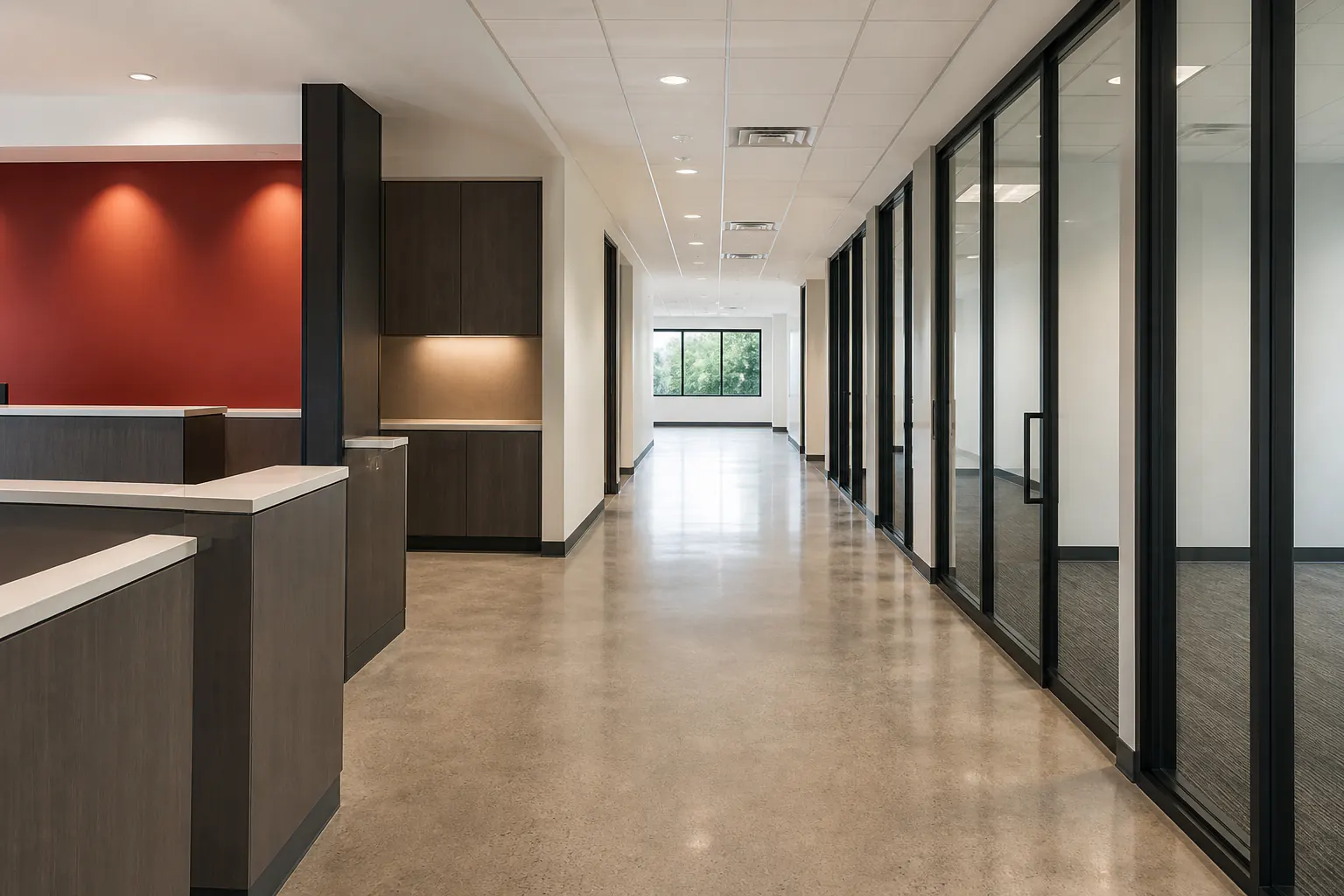
Post-Construction Cleaning
Guides for contractors, builders and property managers on every stage of a construction clean: planning the visits, pricing them, handling glass, film and overspray, and closing out the handover.
Learn when to request rough, progress, final or fluff cleaning, with examples of where each visit fits a commercial build.
Use the checklist to note the rooms, surfaces, and cleaning needs, along with your preferred timing and any remaining construction work.
The preparation guide explains what to do before cleaners arrive: identify finished areas, address remaining building work, and arrange access to the surfaces being cleaned.
Planning comes first. The phase guide and rough clean vs final clean show which visit fits your project now, the cost guide gives 2026 price ranges, and the project checklist collects every room, surface and access detail before you request a quote.
Surfaces come next, with guides to construction dust, stickers and film, overspray and adhesive, and glass. For the handover, the preparation guide and what contractors expect from a final clean set out the last week, with touch-up, move-in and pre-opening guides for the days after.
Superintendents laying out a schedule start with the phase guide, which shows where rough, progress, final and fluff visits fall between trades. Property managers handling a suite turnover go straight to the preparation guide, then send the checklist with the request.
The checklist is the shared document between them. Whoever knows the site best fills in rooms, surfaces and access details, and the person arranging the cleaning sends it with the request so nothing is lost between the field and the office.
Booking a progress visit instead of waiting for the final clean is covered in the phase guide, and stuck-on paint or adhesive in the overspray and adhesive guide. A trade due back after the final clean is planned with the punch list touch-up guide.
Each answer is written for the person on site, not for a cleaning specialist. A superintendent can read a section between trade meetings, note what applies to the project and move on, then send the filled-in checklist when the rooms are close to ready.
On a project released in sections, the checklist works best as one copy per section. Each copy lists the rooms in that section, the trades still due and the date it opens, so every progress visit is planned from its own sheet. The phase guide then shows where the final clean sits once the last section is done.
Each guide points to the service that fits the next step. New construction and full renovations are covered on the commercial post-construction cleaning page, and suite remodels with shared corridors are handled under tenant improvement cleaning.
For projects close to handover, final and turnover cleaning explains the final clean and the fluff clean that follows punch repairs. Reading the matching guide first means the request already carries the details that service needs.
Resources
Deeper guides on the visits, finishes and handover details that come up on commercial projects.
01
How the early rough visit and the last detailed clean differ in timing, surfaces and the condition each one leaves behind.
Read the guide02
Per-square-foot 2026 ranges by city, two worked examples and the job details that move a construction cleaning price.
Read the guide03
Fitting the last clean between the final trade, furniture delivery, IT setup and the first workday in a renovated office.
Read the guide04
Where fine construction dust settles on ledges, glass and fixtures, and the top-down order that keeps it from coming back.
Read the guide05
How labels, glass stickers and protective film are assessed and lifted from new windows, fixtures and finishes before handover.
Read the guide06
How stuck-on paint, caulk and adhesive are judged against each new finish before anything is scraped, softened or wiped.
Read the guide07
Why finished rooms need a short return visit after punch-list work, often called the fluff clean, and how to plan it room by room.
Read the guide08
How to plan the last clean before a restaurant or shop opens its doors, from back-of-house rooms to the front window.
Read the guide09
How interior windows, storefront glass, partitions and doors are cleaned after a build without scratching or streaking them.
Read the guide10
The handover order, the walkthrough and what the general contractor provides, laid out as a checklist for closeout.
Read the guide11
In Northern and Central California, construction dust is regulated district by district, and the numbers change at the county line. This guide puts ten air districts side by side: the rule, what it covers, the trackout and visible dust limits, and when a dust control plan or notice is due.
Read the guide12
A final cleaning section tells the general contractor exactly how clean the building must be before the owner accepts it. This page shows where that section sits in the project manual, what seven public owners put in theirs, and gives you a free, editable Word template to start your own.
Read the guide13
Choose the region your project is in, type the finished floor area, and the calculator returns a 2026 planning range for the construction cleaning on the whole job. The range covers every visit, so it drops straight into a budget or a bid package.
Use the calculator14
California’s construction silica rule limits dry sweeping, dry brushing and compressed air wherever they could add to a worker’s exposure, and points to wet sweeping and HEPA vacuums instead. Here is what the rule says, the exceptions, the exposure numbers, and who sets the cleanup methods on a job site.
Read the guideA few useful answers
The phase guide, which shows which visit to request. Then check the cost guide and fill out the checklist.
The preparation guide, since many tenant improvements go straight to a final clean. Then use the checklist to list the suite and any shared corridor.
Yes. The preparation guide makes a useful handout in the final week, because it shows what each trade should finish before the cleaning visit.
On the project checklist, under surfaces and residue, next to the floor and window materials.
Fill in one copy per address. Each site then keeps its own room list, access contact and dates, and all of them can go in a single request.