
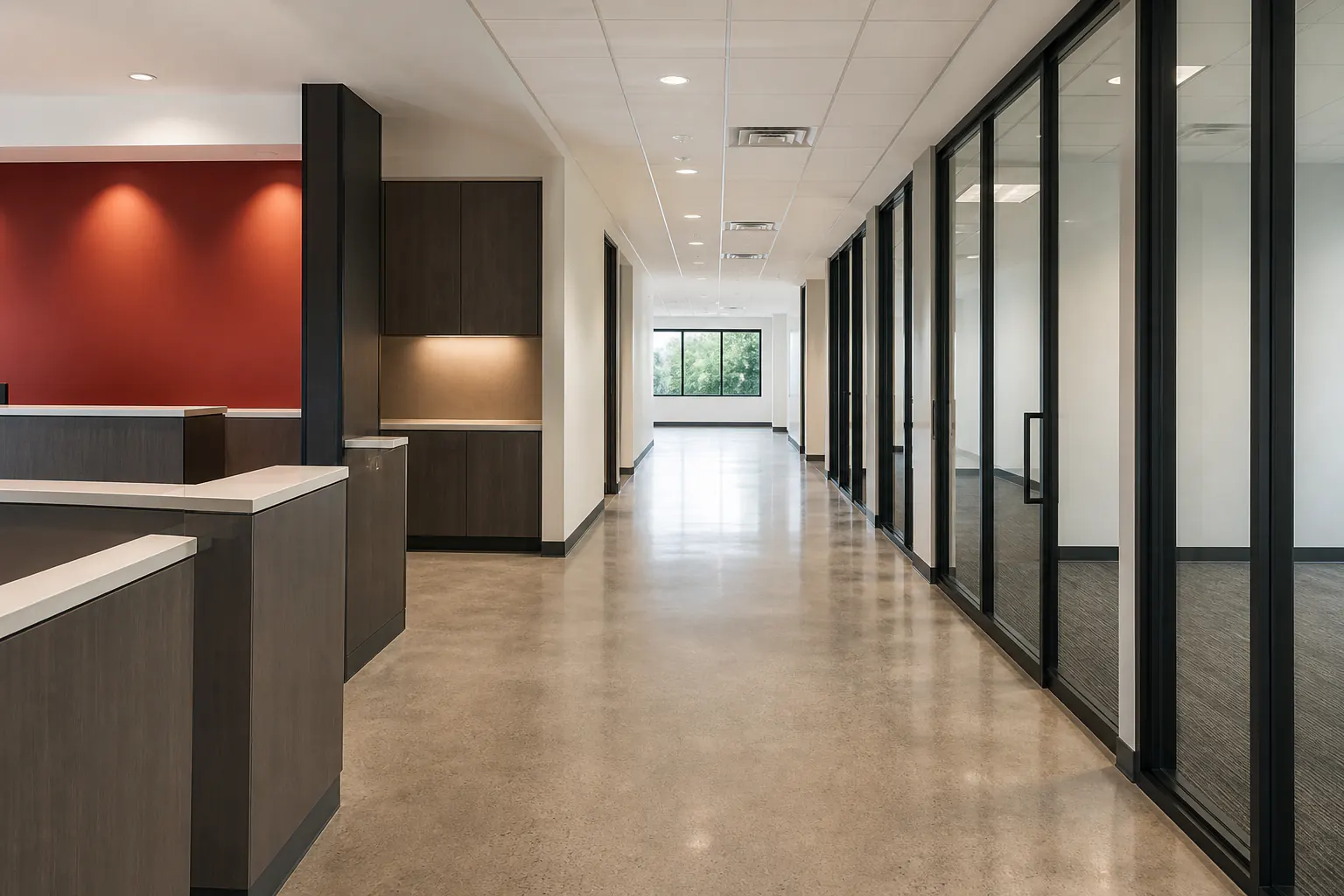
Post-Construction Cleaning
Tenant Improvement Cleaning
A tenant improvement remodels one suite while the rest of the building keeps working. Tenant improvement cleaning is planned around that fact. Crews clean behind the contractor’s dust barrier while the neighbors stay open, bring new and kept finishes to handover condition before the punch walk, and come back for the corridor and the last touch-up in the week the tenant moves in.
What a suite remodel leaves behind
A tenant improvement, or TI, is construction inside a building that never closes. Demolition strips out old partitions, ceiling tile and carpet, then new walls, lighting, flooring and millwork go in, sometimes within a few weeks. Next door, a tenant is answering phones. The elevator carries visitors all day, and the hallway outside the construction door is shared space the landlord expects back spotless.
That shapes the residue. Demolition dust from old gypsum, ceiling tile and floor mastic is coarser than the fine powder of new sanding, and both travel. They ride out on boots past the walk-off mat, slip around the edges of plastic zip walls and get drawn into return-air grilles that serve more than one suite. A TI clean deals with the dust inside the suite and with the trail it leaves outside.
Second-generation space brings the other complication: the remodel keeps some finishes. The ceiling grid, a run of existing carpet, restroom tile, older glass sidelights or the reception desk stay put while everything around them changes. Those kept surfaces carry years of wear under a layer of fresh construction dust, and they cannot take the scraping or strong solvents that new tile and glass tolerate. Cleaning old and new side by side, each with its own method, is most of what separates this work from a ground-up final clean.
Who has a stake in the remodel
Who books the cleaning depends on who builds the suite. When the landlord builds the improvement, its contractor does the work and the property manager books the cleaning. When the tenant builds it, the tenant hires its own general contractor, and that contractor books the cleaning under the landlord’s building rules. Either way, the property manager controls access, the freight elevator and the common areas, and the tenant holds the move-in date the whole schedule points at.
Neighbors have a stake too, even though they never sign anything. A dental office next door or a law firm across the hall notices dust on its own glass well before anyone else does. Careful TI cleaning keeps those complaint calls off the property manager’s desk and keeps the contractor in good standing with the building.
The suites that get remodeled most
Office suites in multi-tenant towers in downtown Sacramento, Oakland and San Francisco are the most common TI, usually timed to a lease renewal or a new tenant taking the space. Retail spaces in shopping centers around Roseville and San Jose turn over when a brand changes, with the opening date set by the landlord.
Medical and dental suites in places like Elk Grove and Santa Rosa add exam rooms, new plumbing and sheet vinyl or specialty flooring. Light industrial suites pair a front office with shop space, and the office half gets a finish-level clean while the shop side is cleaned to a working standard. Each type follows the same four phases below, scaled to the size of the suite.
Phase 1: Rough cleaning behind the dust barrier
Rough cleaning on a TI has two jobs. Inside the suite, it keeps the floor clear for framers, electricians and the drywall crew. Outside it, the crew checks the route the trades use from the construction door to the freight elevator and removes tracked dust before it reaches the next tenant’s reception.
The visit before the flooring crew starts deserves its own date. Old adhesive ridges and drywall crumbs left on the slab show through new carpet tile and luxury vinyl, so the slab is swept, scraped where needed and vacuumed, and the installer starts on a clean surface.
Phase 2: Final clean before the punch walk and TI inspection
The final clean works from the top down. Crews dust light fixtures, diffusers and the kept ceiling grid, then clean glass fronts, door frames, millwork, switch plates and baseboards before finishing the floors. Kept finishes get their own treatment: existing carpet is vacuumed and spot-cleaned rather than scraped, older stone or tile is cleaned with pH-neutral products, and paint or adhesive on retained surfaces is tested in a hidden spot before anything stronger is used.
Whenever the work reached them, the corridor and the elevator lobby belong to this visit. The property manager usually joins the punch walk on a TI, and the shared hallway is the first thing they look at. The final and turnover cleaning page explains the handover standard in detail.
Phase 3: Touch-up after punch repairs and late installs
Late trades are part of every TI. The painter returns for touch-ups, the electrician swaps a trim ring, the furniture dealer assembles workstations and the IT contractor runs the last patch cords. The touch-up follows them through the suite, so the tenant’s first morning starts on finished surfaces. Contractors call this pass the fluff or sparkle clean, and its job is to leave the suite looking perfect when the contractor hands it to the tenant. The punch list touch-up guide covers how this visit is planned.
Phase 4: Move-in support and the corridor reset
Moving day undoes part of the touch-up. Dollies mark thresholds, cardboard dust settles under desks and the glass entry collects handprints. A short visit after the movers leave resets the suite before the first full day of business.
The corridor reset belongs to tenant improvements in particular. Ram board, corner guards and elevator pads protect the common areas during the job, and the floor under them is rarely as clean as it looks when they come up. Cleaning the hallway after the protection is removed returns the shared space to the condition the landlord expects. From there, the suite passes to the building’s regular janitorial service, and the office move-in guide covers timing around furniture and IT.
Checklist: suite entry, reception and the shared corridor
These are the surfaces the property manager and the neighbors see, and they decide whether the remodel reads as finished.
- Suite entry door, frame, hardware and sidelight glass cleaned on both faces
- Reception desk and transaction top wiped, and kept millwork dusted and polished with a product matched to its finish
- Corridor walls and door frames from the suite to the elevator wiped of dust and hand marks
- Corridor carpet vacuumed wall to wall, with spot treatment where trades tracked through
- Elevator lobby, call buttons and the freight car interior cleaned where the work used them
- Suite numbers and signage dusted without wetting backlit parts
Checklist: offices, conference rooms and open work areas
Private offices and meeting rooms mix new paint and lighting with kept ceilings and windows, so each room is checked for both.
- Light fixtures, diffusers and the kept ceiling grid dusted, with stained or chipped tiles flagged for the contractor
- Window sills, blinds and interior glass partitions cleaned, and protective film removed
- Workstations, shelving and built-ins wiped inside and out once they are installed
- Outlets, switch plates, data ports and floor boxes cleared of drywall dust and cable clippings
- Baseboards, door frames and kick plates wiped down
- New carpet tile vacuumed, existing carpet spot-cleaned, and hard floors damp-mopped to the manufacturer’s instructions
Checklist: break room, restrooms and support rooms
Small rooms hold most of the fixtures a tenant opens and tests on the first day.
- Break-room cabinets cleaned inside and out, with sawdust cleared from shelves and drawer tracks
- Appliances unwrapped, labels removed, interiors wiped and stainless cleaned with the grain
- Sinks, faucets and counters cleaned and polished, with caulk lines checked for dust
- Restroom fixtures, partitions, mirrors and dispensers cleaned, and kept tile and grout washed with a pH-neutral product
- Copy, storage and IT rooms dusted, including shelving and rack tops before equipment goes live
- Janitor closet and mop sink left clean for the building’s own crew
Scheduling a TI inside an occupied building
Building rules set the calendar. Many multi-tenant buildings limit dusty or noisy work to evenings and weekends, reserve the freight elevator by the hour and route all construction traffic through one loading dock. Visits are planned inside those hours, so a rough clean that ends before dawn leaves the corridor ready when neighboring staff arrive.
Paperwork comes first. The property manager will ask for a certificate of insurance naming the landlord and its management company before the crew receives a badge or a key. Final Pass is insured and bonded and carries workers’ comp, every cleaner is background-checked, and the certificate goes out with the visit plan.
Phasing follows the remodel. Some TIs keep the tenant working in half the suite while the other half is rebuilt, then swap. Each half gets its own rough, final and touch-up visits, and the occupied side is cleaned at the end of each shift so staff come back each morning to a clean side of the suite. Larger suites are released room by room or wing by wing, and a supervisor walks each released area before it goes back into use.
Inspections set the tightest dates. The TI permit’s final inspection, the sprinkler and fire alarm tests and the landlord’s own sign-off all call for a clean, unobstructed suite. Booking the final clean two or three working days ahead of the first of those walks leaves room for a touch-up if a trade has to come back.
What sets the price of a tenant improvement clean
As of 2026, tenant improvement cleaning across the region runs about $0.28 to $0.70 per square foot, inside the post-construction band of $0.21 to $1.00 per square foot. One rate covers every phase booked for the remodel.
Five factors place a suite in that range. Size comes first: a small suite carries the same setup and travel as a larger one, so its rate per square foot runs higher. Finish level follows, since medical, restaurant and executive suites with stone, millwork and many fixtures take longer than an open office with new carpet tile. The phases booked matter next, because the one rate reflects every visit in the plan, whether that is a single final clean or rough cleans, a final, a touch-up and a corridor reset. Access adds labor when work is limited to after hours, the freight elevator is reserved in short blocks or the dock sits far from the suite. Glass rounds it out: demountable partitions, glass fronts and interior storefronts add detail time on both faces.
Kept finishes count as well. Retained surfaces need slower methods, and stuck-on paint or adhesive on them is assessed before treatment. The cost guide walks through a full estimate from square footage to total.
A few useful answers
Common questions
Can the businesses next door stay open while a suite is cleaned?
Yes. Dusty work stays behind the contractor’s barrier, the corridor is cleaned at the end of each visit, and noisy tasks are scheduled for the hours the building allows.
How are kept carpet and tile treated compared with new finishes?
Each surface gets a method suited to its age and condition. Kept carpet is vacuumed and spot-cleaned, and older tile and stone are washed with pH-neutral products instead of being scraped.
Who books the clean when the landlord builds the improvement?
The property manager usually books it, sometimes through the landlord’s contractor. When the tenant hires its own contractor, that contractor books the cleaning.
Is the hallway outside the suite part of a tenant improvement clean?
Yes, whenever the work reached it. The corridor, the elevator lobby and any shared restroom the trades used are added to the suite’s visits.
Will your crew clean a suite after the building’s tenants go home?
Yes. Visits follow the building’s contractor hours, which in many towers means evenings and weekends, so the corridor is ready before neighboring staff arrive.
What does the property manager need before the crew starts?
A certificate of insurance naming the landlord and its management company, a crew list for badges or keys, and a freight elevator reservation for each visit.
How far ahead of the TI final inspection should the final clean happen?
Two or three working days ahead. That leaves time for a touch-up if a trade returns before the inspector or the landlord walks the suite.
Who cleans the corridor after the floor protection comes up?
Our crew does, as the corridor reset in the move-in phase, booked by the property manager or the contractor once the ram board and elevator pads are removed.
Resources
Helpful guides
Related services for suite remodels
Construction window cleaning handles the exterior glazing and storefront glass of a ground-floor suite. New floor cleaning and first finish scrubs new concrete, cleans and polishes new stone and lays the first finish coats on new vinyl tile, and mid-construction cleaning describes the rough visits in more depth. Construction pressure washing clears a storefront sidewalk or loading dock the job dirtied.
Whole floors built from bare shell follow office build-out cleaning, while restaurant and retail tenant spaces follow the restaurant post-construction cleaning and retail post-construction cleaning plans, with their kitchens and sales floors on their own schedules.